




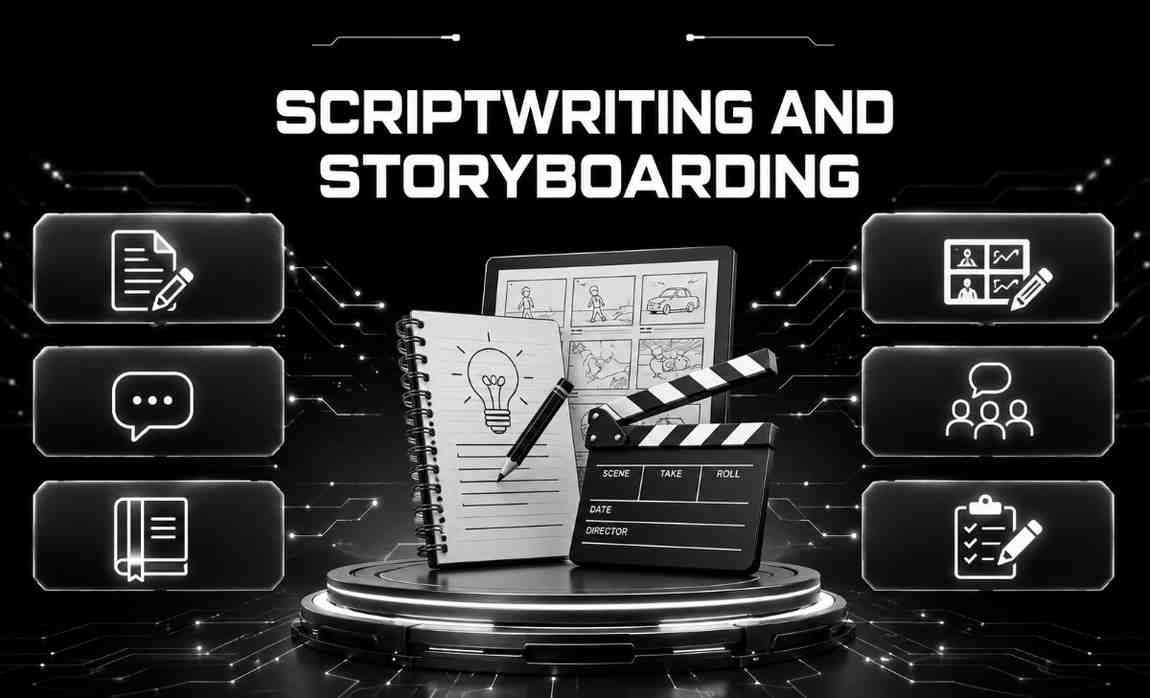
Scriptwriting and storyboarding
Scriptwriting and storyboarding work together to create a strong foundation for any video, animation, or multimedia project.
Scriptwriting focuses on defining the message, tone, and structure of the story. It includes writing narration or dialogue, outlining key points, building a logical flow, and making complex ideas easy to understand. A well-crafted script ensures the video communicates clearly and keeps viewers engaged from start to finish.
Storyboarding translates the script into a scene-by-scene visual blueprint. This involves creating sketches or frames that show camera angles, actions, transitions, environments, and on-screen elements. It helps align teams on the visual direction, avoid production errors, and streamline the entire workflow.
Together, scriptwriting and storyboarding ensure your video is purposeful, visually consistent, and smoothly executed—resulting in a polished final product that effectively delivers your message.
Built on Trusted Technologies
At Capnis, we work with modern, industry-trusted technologies that power fast development, strong security, and reliable performance across all projects.

Final Draft
Final Draft is a leading software application designed specifically for scriptwriting. It offers features such as industry-standard formatting, real-time collaboration, and script analysis tools to streamline the writing process and ensure professional-quality scripts.

Celtx
Celtx is a comprehensive pre-production software suite that includes tools for scriptwriting, storyboarding, scheduling, and budgeting. It allows writers and filmmakers to create and collaborate on scripts and visualizations in a single platform, facilitating seamless workflow management.

Adobe Story
Adobe Story is a cloud-based screenwriting and production planning tool that integrates with other Adobe Creative Cloud applications. It offers scriptwriting features with automatic formatting, script collaboration, and integration with Adobe Premiere Pro for streamlined production workflows.

WriterDuet
A real-time collaborative scriptwriting tool with version tracking and cloud backups.
Fade In
Professional screenwriting software known for performance, simple UI, and advanced revision tools.

Arc Studio Pro
Modern screenwriting app with auto-formatting, outlining tools, and real-time collaboration.

StudioBinder
Production management platform offering storyboards, shot lists, scripts, call sheets, and scheduling tools.

Storyboarder
A free, easy-to-use storyboarding tool for creating visual storyboards quickly with drawing tools or imported photos.
FrameForge
Advanced 3D storyboarding software used for pre-visualization with characters, props, and camera tools.
Growing sales through exceptional services

Collaborative scriptwriting allows multiple writers, directors, and producers to work together in real-time on the same script. With features like version control and shared commenting, collaborators can provide feedback, make revisions, and track changes seamlessly, ensuring that the script evolves cohesively and efficiently.
Interactive storyboarding tools enable artists and filmmakers to create dynamic storyboards with interactive elements such as audio, animation, and annotations. This allows for more immersive previsualization, giving stakeholders a clearer understanding of the pacing, timing, and visual style of the final production.
Script analysis and feedback tools provide writers with valuable insights into the structure, pacing, and character development of their scripts. By analyzing key metrics such as dialogue density, scene length, and plot arcs, writers can identify areas for improvement and refine their scripts to better engage and resonate with audiences.
Discover What We Deliver

The Art of Scriptwriting and Storyboarding
Provide an introduction to the gallery, explaining the importance of scriptwriting and storyboarding in the filmmaking and animation industries. Highlight the creative process involved in crafting narratives and visualizing scenes.
Crafting Narratives Through Script and Storyboard
Display excerpts from scripts of various genres, showcasing the diversity of storytelling techniques and narrative styles. Include commentary on the writing process, character development, and dialogue.
Storyboard Exhibition
Showcase storyboard panels from different projects, demonstrating how visual storytelling evolves from script to screen. Include comparisons between script excerpts and corresponding storyboard frames to illustrate the translation of words into images.Built for Your Business
Our services are designed to address real-world business challenges through a practical, results-driven approach. We focus on understanding your requirements, delivering reliable execution, and ensuring ongoing support to help your business operate efficiently and grow with confidence.
Capnis InfoTech Private Limited

Service Questions
Scriptwriting, also known as screenwriting, is the art of crafting a written screenplay or script for films, television shows, animations, or other visual media. It involves developing characters, dialogue, and plotlines to create a cohesive narrative that guides the production process.
Storyboarding is the process of visually planning a project, such as a film or animation, shot by shot. It involves creating a series of illustrated panels or frames that represent each scene, shot composition, camera angle, and action sequence. Storyboards serve as a blueprint for the visual narrative and help filmmakers and animators visualize the flow and pacing of their project.
Scriptwriting and storyboarding are essential stages in the pre-production process of filmmaking and animation. A well-written script provides the foundation for the entire production, guiding the direction, dialogue, and character development. Storyboarding helps filmmakers and animators visualize the script and plan the visual elements of each scene, ensuring coherence, continuity, and efficiency in the production process.

FutureForge Robotics – CEO: Isabella Chen
Client““Capnis delivered exceptional scriptwriting and storyboarding that transformed our ideas into a clear and compelling narrative. Their team crafted engaging scripts supported by detailed, visually impactful storyboard sequences. Every scene was thoughtfully planned, ensuring smooth storytelling and strong message delivery. Communication was excellent throughout, with timely revisions and collaborative guidance. We highly recommend Capnis for professional and highly creative scriptwriting and storyboarding services.””
Request a quote
Three quick steps—your details, scope & timing, then budget. We route Scriptwriting and storyboarding requests to the right delivery lead with full context.